



You may have heard the saying, “It’s a buyer’s market,” but what does that really mean for homeowners? In the current residential real estate market, many homes are selling for under their asking price and taking longer to sell. While this shift is great news for buyers, it’s far less favorable for sellers.
According to RedFin, homes are selling for nearly 2% below asking price and sitting on the market for an average of 56 days — the longest period in nearly five years. Unsurprisingly, rising mortgage rates are the primary driver behind this slowdown. With rates climbing, monthly payments have reached near-record highs, putting increased pressure on homeowners.
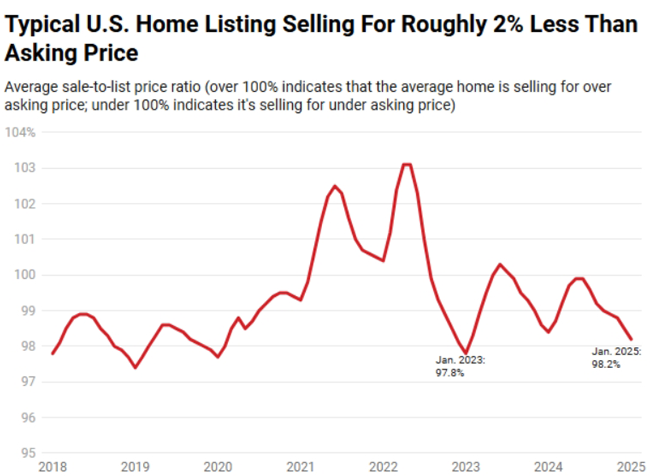
Source: RedFin.com, February 12, 2025
I’m not a real estate professional, but I do understand that a home is a critical asset for many individuals and families. As a financial advisor, my job is not to estimate the value of your home, but rather to determine its role in your overall financial strategy. Is it a reliable asset that strengthens your financial foundation, or could it turn into more of a liability over time?
Imagine a married couple with adult children who are looking to downsize to free up equity for retirement. They might envision their home selling quickly, but current market conditions and higher mortgage rates causes the listing to linger longer than expected. This could not only impact their retirement timeline but also require them to adjust their short-term financial strategy.1
Your home is likely one of the most significant investments you will make in your lifetime, so understanding its role in your financial strategy is key to staying ahead of shifting real estate trends. If you’re looking to evaluate how your home aligns with your long-term financial goals or how to adapt your strategy to changing market conditions, let’s talk.
1Hypothetical examples are for illustrative purposes only. These examples do not constitute as investment, legal, or tax advice for any person or persons having circumstances similar to those portrayed and a financial advisor should be consulted. These examples do not represent actual clients. Any resemblance to actual people or situations is purely coincidental.