


The Federal Reserve’s commitment to maintaining “higher interest rates for an extended period” has rattled financial markets since recent hikes began in March 2022, raising the cost of everything from mortgages to credit cards.
Now, the ongoing events in the occupied territories of Israel and Palestine have added to tensions and, in addition to a grievous loss of life, led to an immediate increase in oil prices.
Rising oil prices could continue to drive inflation, potentially influencing the Federal Reserve’s decision to maintain higher interest rates for longer.
But are rates high enough? In this chart, you can see that the current rates on the 10-year government bond have surpassed those of several European countries, which experience higher inflation rates compared to the United States.
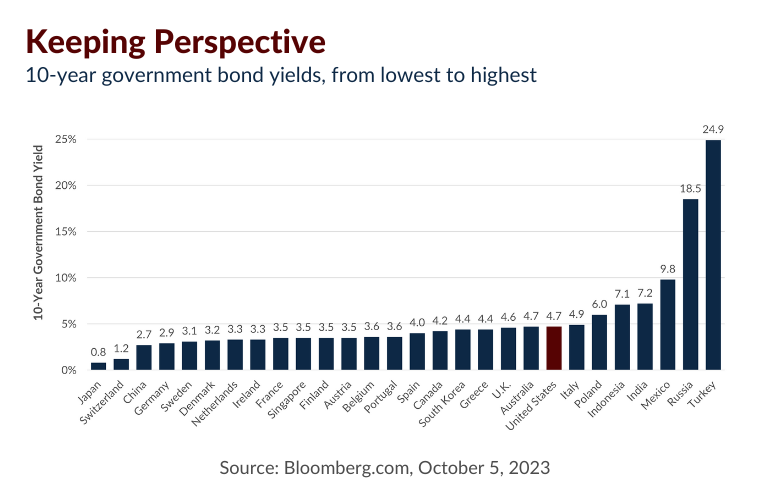
Remember, the Fed is attempting to “thread a needle” by increasing interest rates to slow the economy–and reduce inflation–without causing a recession.
So, while you may be starting to feel some relief from inflation at the grocery store, if you’re in the market for a new car or home, you can expect higher financing costs. Those higher rates may prompt some to hit “pause” on that new car, which is exactly what the Fed wants.
If you have questions or concerns about how these evolving economic conditions could impact your financial plan, please don’t hesitate to reach out. We’re here to help guide you through these complex times.